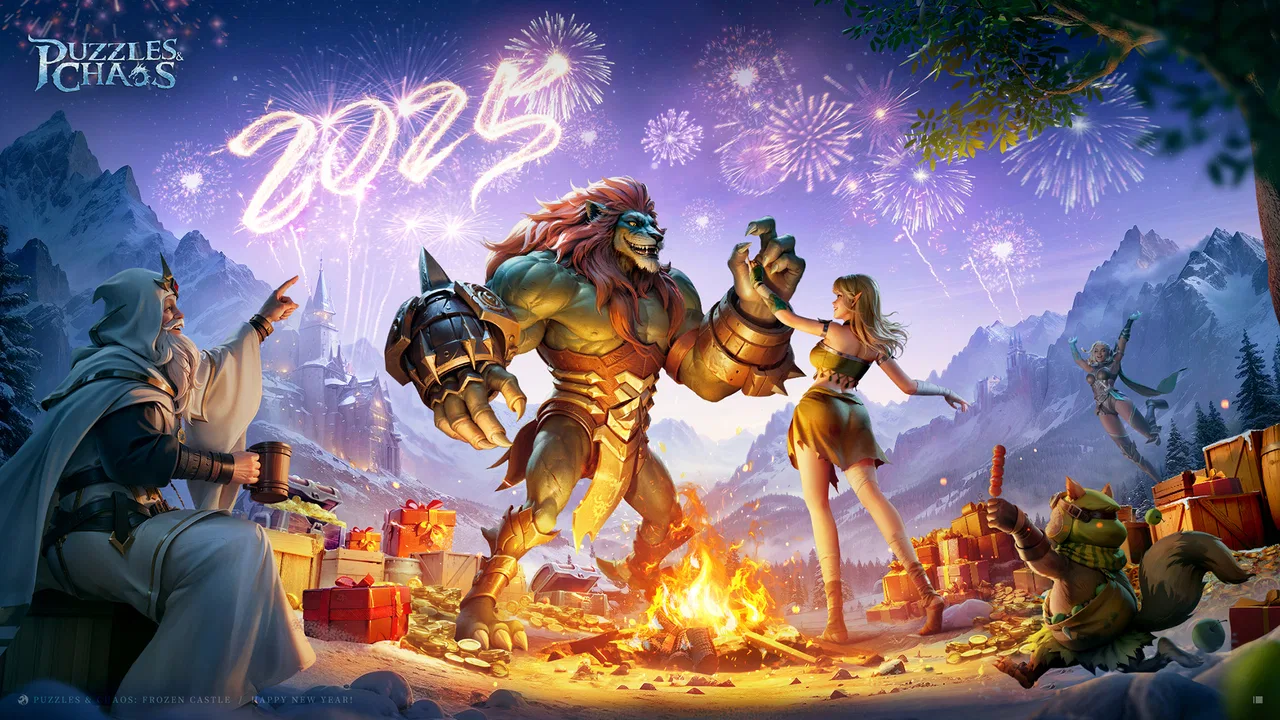
Puzzles & Chaos: Frozen Castle
- 4.2
- Rating
- 10.00M
- Installs
- Free
- Price

 Analysis by App-foxy
I approached Puzzles & Chaos: Frozen Castle expecting a familiar match-3 game, but its strategy layer quickly became the more important part. The basic idea is easy to understand: match pieces to fight, improve your position, and push back against a frozen setting. What makes it different from a simple puzzle app is that each move feels connected to a larger battle rather than being an isolated score challenge.
That combination makes it appealing if you enjoy puzzle games but want more direction than endless boards provide. I also think it is a better fit for players who like making small decisions under pressure than for someone looking for a completely relaxed matching game. The free download makes it easy to try, although in-app purchases range from $0.99 to $99.99 per item, so I would approach the progression with a clear spending limit.
A match-3 game with a colder, more strategic personality
The game comes from 37GAMES and sits in the strategy category. Its central appeal is the way puzzle actions are framed as battles in a frozen world. You are not simply clearing colorful shapes for a high score; you are trying to make useful matches while thinking about what those matches accomplish in the fight.
You May Also Like

 Blood Strike: 2.5 Anniversary
Blood Strike’s Loadouts Turn Every Drop Into a Tactical Gamble
A close look at Blood Strike’s custom loadouts: how fast access to signature weapons reshapes its battle royale rhythm, rewards preparation, and narrows the gap between fights.

 Pandora - Music & Podcasts
Pandora’s Music Is Easy to Start, but Harder to Recover
Pandora’s strength is its low-effort path from a seed to a station. Its weak spot is how much confidence it asks you to place in connection, setup, and quiet recovery.

 8 Ball Pool
 Is Built on Rivalries, Rematches, and Routine
A close look at the rivalries, rematches, shared routines, and unanswered safety questions that turn a quick pool match into a persistent mobile community.

 Samsung Music
’s Quiet Strength Is Playing What You Already Own
Its reach comes less from spectacle than from dependable access to a personal library. That simplicity is both the app’s strongest retention engine and its ceiling.

 AccuWeather: Weather Radar
AccuWeather Review: A Quick, Clear Forecast for Everyday Decisions
For everyday plans, the best forecast is the one you can understand quickly. AccuWeather makes rain timing, radar, and local conditions easy to act on, with a few trade-offs.

 Hill Climb Racing
Why Hill Climb Racing Still Turns Crashes Into One More Run
A tiny car, a bumpy hill and one more upgrade: Hill Climb Racing keeps resurfacing because its simple chaos makes every near-miss feel personal.
More From Our News Desk



That distinction matters during the first sessions. A large match may look attractive, but the most useful move is often the one that supports the immediate objective. I found myself scanning the board before touching anything, checking which pieces could create a chain and which move would help me recover from an awkward layout. That extra pause gives the game more weight than a purely reflex-based puzzler.
The Teen content rating is worth keeping in mind for families deciding whether it suits a younger player. It is also a sensible reminder that this is presented as a battle-focused strategy experience, not a basic children’s matching toy. On a compatible device running Android 6.0 or later, the entry barrier is fairly low, but the style of play will not appeal equally to everyone.
What the first launch feels like
My advice is to treat the opening as a guided lesson rather than rushing through it. The first useful goal is not to understand every system at once. It is simply to recognize how a match changes the battle and how the game wants you to connect puzzle choices with progress.
During setup, I would keep notifications and purchases in mind rather than accepting every prompt automatically. The game is free to start, but the presence of optional purchases means it is sensible to decide in advance whether you want to play entirely without spending or allow occasional purchases. That decision is easier to make before a difficult stage creates pressure.
I would also give the opening instructions your full attention, even if you have played match-3 games before. Familiar controls can create false confidence. The board may look immediately understandable, while the battle context changes which match is valuable. Skipping guidance can leave a new player wondering why an apparently strong move did not produce the expected result.
How I reached the first meaningful success
My first reliable improvement came from changing the way I searched the board. Instead of making the first available match, I looked for moves that could create a second opportunity after the pieces fell. This is a small habit, but it makes the early battles feel less random and gives you more control over the turn.
I also stopped chasing the biggest-looking combination every time. A dramatic match is satisfying, yet a smaller move in the right place can open a better route for the next turn. When the battle is already under control, I prefer setting up the board. When the opponent or objective is creating pressure, I prioritize the move that produces an immediate useful effect.
The most reassuring first milestone is learning to choose a move for its follow-up, not just its instant reward. Once that clicks, the game becomes much less intimidating. You begin to see the board as a short sequence of decisions instead of a collection of unrelated pieces.
A practical routine helped me. I first checked the edges and lower part of the board, because moves there can change more of the layout. Then I looked for a match that might create another match nearby. Only after that did I choose the move. This is not a complicated technique, but it prevents the common beginner mistake of spending every turn on the most obvious option.
Where new players commonly get confused
The biggest source of confusion is the difference between “a legal match” and “a good battle move.” The game lets you act quickly, but quick action is not always efficient action. If you approach every round like a standard casual puzzle, you may clear pieces without improving your position.
Another point of friction is the feeling that progress has slowed when the board becomes less cooperative. I initially interpreted an awkward layout as a sign that I had made a mistake. In practice, some turns are about limiting the damage and preparing a better board rather than producing a spectacular result immediately.
It is also easy to focus so closely on the puzzle area that you overlook the wider objective. Before moving, I recommend checking what the current battle is asking you to accomplish. If the goal is different from simply clearing pieces, the best move may be the one that supports that specific condition rather than the one that produces the largest visual effect.
Players may also wonder whether they need to spend money to enjoy the game. I would not make that assumption after the opening. The more useful approach is to play long enough to understand where your own patience runs out. If you dislike waiting, repeating a challenge, or managing a slower progression, purchases may become tempting. If you enjoy improving through better decisions, you may prefer keeping the wallet closed and treating each setback as a puzzle to solve.
How it compares with ordinary match-3 alternatives
Compared with a straightforward match-3 game, this one asks more of your attention. Traditional alternatives are often ideal when you want a short, self-contained distraction: open the app, clear a board, and move on. Here, the battle framing gives your choices a continuing purpose, which I found more engaging over several sessions.
The trade-off is that it is not as immediately calming. A pure puzzle game can be satisfying even when you play on autopilot. Puzzles & Chaos: Frozen Castle is less forgiving of that habit because the puzzle is tied to strategic progress. If you want a quiet game with minimal planning, another match-3 option may serve you better.
It also differs from a conventional strategy game that relies mainly on menus, long-term planning, or resource management. The moment-to-moment action is still built around matching, so the game remains approachable. However, the puzzle board gives the strategy a more active feel. You are making decisions while the battle is unfolding rather than only preparing for a later outcome.
That middle ground is the strongest reason I would recommend it. It can suit someone who finds standard match-3 games too shallow but finds traditional strategy games too slow or complicated. It is less suitable for players who dislike combat themes, progression pressure, or the possibility of optional spending becoming part of the experience.
A realistic everyday way to play
I found the game easiest to fit into a normal day in short, focused sessions. For example, if I had a few minutes while waiting for an appointment, I could complete a small amount of progress without needing to learn a new control scheme. The important part was starting with a clear intention: either advance a battle, practice reading the board, or check what the next objective required.
That approach is better than opening it absent-mindedly and making random moves. A short session can still be useful if you spend the first moments observing the board. If you only have enough time for one attempt, prioritize learning why a move worked or failed. That turns a brief play period into progress even when the result is not a victory.
For longer sessions, I would take a break after a frustrating loss rather than immediately repeating the same approach. Match-3 boards can encourage emotional play because a near-success makes you want to try again instantly. Waiting a moment helped me spot that I was repeating the same opening habits instead of changing my decision-making.
Three habits that make the battles easier to read
First, scan before moving. Look for possible chains, but also notice whether a move will leave useful pieces in reachable positions. This is especially helpful when the board appears crowded and several matches are available. The strongest-looking option is not automatically the most valuable one.
Second, separate setup turns from emergency turns. A setup turn creates a better next move, while an emergency turn addresses an immediate problem. Confusing the two can make you waste a valuable opportunity. If the current situation is safe, prepare. If the battle is becoming dangerous, take the direct benefit even if it is less elegant.
Third, use failed attempts as information. Instead of only asking why the board was unlucky, ask whether you committed too early, ignored the objective, or spent a move on a low-impact match. That review is more useful than simply replaying the level with the same opening.
These habits are not obvious from the short store description, but they are what made the experience feel more strategic to me. They also help answer a practical question new players often have: how do I improve without immediately buying something? In my experience, better board reading is the first place to look.
Progression, spending, and the right expectations
The game is free, which makes trying it straightforward, but free entry does not mean every player will experience progression in the same way. Some people are comfortable repeating challenges and improving gradually. Others prefer a faster route and may be more interested in optional purchases. I would decide which kind of player you are before spending, not during a moment of frustration.
The listed purchase range stretches from small impulse amounts to much larger individual items. That wide spread is a reason to use device-level purchase controls if the game will be played by children or shared with family members. The Teen rating and the purchase structure together make adult supervision a sensible choice for younger users.
I also recommend judging the game on its puzzle-strategy loop rather than on how quickly you can move through it. If your enjoyment depends entirely on constant new rewards, slower sections may feel tiring. If you enjoy refining a plan and seeing a difficult board become manageable, the same sections can be satisfying.
Who should install it, and who should skip it
I would recommend this game to match-3 fans who want battles to give their moves a stronger purpose. It is a good choice for players who like examining a board, planning one move ahead, and adjusting after a setback. It can also work for someone moving from casual puzzles toward strategy without wanting to begin with a complicated interface.
I would skip it if you want a completely passive time-killer, a purely relaxing puzzle atmosphere, or a game with no interest in optional purchases. I would also be cautious if you dislike repeating difficult stages. The strategy layer makes failure more meaningful, but it does not make failure less frustrating for every player.
On the technical side, the current version is 1.86.00, and the game has built a substantial audience, with over ten million installs and an average rating of 4.4 from around 116 thousand ratings. Those figures suggest that the core idea has found a broad audience, although popularity alone should not decide whether its battle-puzzle rhythm suits you.
My recommendation after spending time with it
What I like most is the way the frozen setting gives ordinary matching decisions a sense of direction. I am not just clearing a board; I am trying to make each move contribute to a battle. That connection is strong enough to keep the game interesting after the novelty of the controls wears off.
What holds it back is the added pressure that comes with that same design. A player who wants effortless matching may find the objectives and strategic choices more demanding than expected. The free-to-play structure also deserves a measured approach, particularly for anyone who tends to spend when progress slows.
My suggested path for a first-time user is simple: install it, read the opening guidance, play the first battles without buying anything, and focus on planning the follow-up move. After a few sessions, ask yourself whether the board decisions are enjoyable even when progress is slower. If the answer is yes, Puzzles & Chaos: Frozen Castle has enough strategic texture to become a regular short-session game. If the answer is no, a simpler match-3 alternative will probably be a better companion.
FAQs for Puzzles & Chaos: Frozen Castle
01What is the main objective of Puzzles & Chaos: Frozen Castle?
Puzzles & Chaos: Frozen Castle combines puzzle-solving with strategic gameplay. Your main objective is to solve match-3 puzzles to defeat enemies and progress through levels. Additionally, you must build and upgrade your castle, gather resources, and form alliances to strengthen your position against various threats.
02Is Puzzles & Chaos: Frozen Castle free to play?
Yes, Puzzles & Chaos: Frozen Castle is free to download and play. However, it does offer in-app purchases for items and resources that can enhance your gameplay experience. These purchases are optional, and players can progress without spending money, although it might take longer.
03What devices are compatible with Puzzles & Chaos: Frozen Castle?
Puzzles & Chaos: Frozen Castle is available on both Android and iOS devices. Ensure your device meets the minimum system requirements for a smooth gaming experience. Regular updates may also require additional storage space, so keep your device up to date.
04Can I play Puzzles & Chaos: Frozen Castle offline?
No, Puzzles & Chaos: Frozen Castle requires an internet connection to play. This is necessary for accessing updates, syncing progress across devices, and participating in in-game events and alliances. A stable connection ensures the best gameplay experience.
05How can I save my progress in the game?
To save your progress in Puzzles & Chaos: Frozen Castle, connect the game to your social media account or cloud service. This allows you to sync your progress across multiple devices and ensures that you don't lose your achievements if you switch devices or reinstall the app.
Pros
- Engaging puzzles with increasing difficulty.
- Stunning graphics with immersive sound effects.
- Frequent updates with new levels and challenges.
- Offline mode available for uninterrupted play.
- User-friendly interface with smooth navigation.
Cons
- In-app purchases can be quite expensive.
- Some levels may feel repetitive over time.
- Occasional ads can disrupt gameplay.
- High battery consumption during extended play.
- Limited social interaction features.

Puzzles & Chaos: Frozen Castle
Gallery